
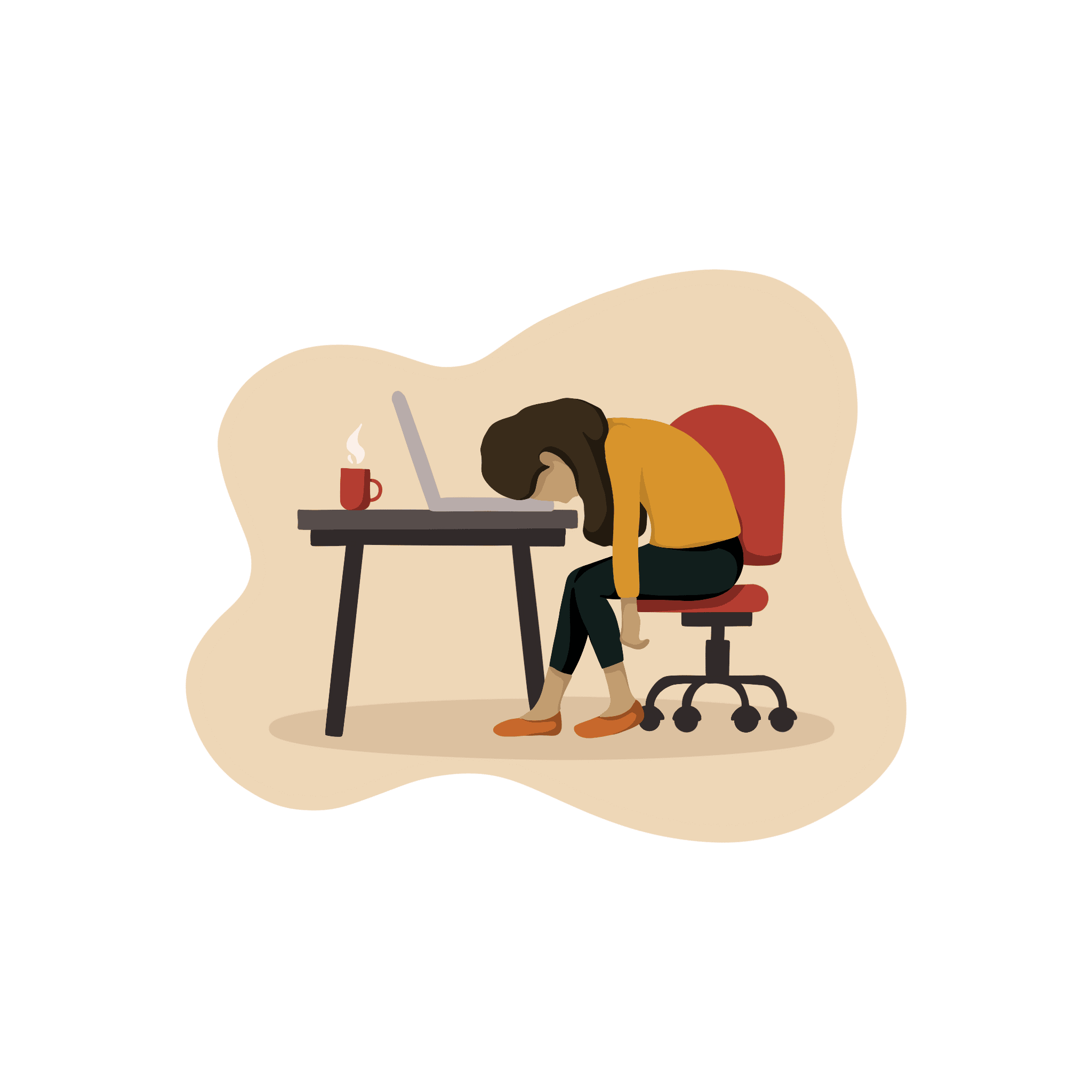
How are you doing? I mean, really doing? Are you actually “fine”, or are you counting the hours until the end of each working day, and trying to outrun burnout?
The emotional load and burnout facing HR teams
I’m asking because I’ve just spent an hour perusing findings on the HR/People profession and I have been left wondering: who is caring for you? I read in last month’s CIPD Pulse Report that 76% of you feel caught between competing expectations, 72% are carrying the weight of emotional demands, and 71% are experiencing cognitive overload. Whilst 46% of senior HR/People leaders are excluded from an organisation’s AI adoption discussions (IBM CHRO study). I then read that employers are least worried about the mental wellbeing of their HR/People teams, in comparison to other employees (HR Magazine). And that, according to Ultimate Resilience, 66% among those who get no support at work, are considering leaving the profession (HCA). And I can’t unsee the incongruence in all of this.
Walking in your shoes
Reflecting on my own time as a Head of People, I both loved the role, and felt worn out by the relentlessness and devaluation of the work, especially when it was seen as a profit-reducing overhead. I was committed to improving things for both the organisation and its people, effective in doing so, but exhausted trying to balance business and people needs, whilst navigating increasingly constrained time and money, fewer colleagues, and ever-shrinking resources. And I say this knowing I was actually quite fortunate. I had a CEO who did care and who was supportive. She used to say something along the lines of “we need to look after the people who look after the people”. With hindsight, and a greater understanding that this is not the norm, I can appreciate what a difference this made. But, if this is not your experience, and you are without this explcit support, then you’re left to figure it out alone.
Why self-care isn’t enough to prevent HR burnout
You may have come across the sayings “put your own mask on first” and “you can’t pour from an empty cup”. And you might have, like me, thought self-care is the antidote to work stress, because walks in the park and time with loved ones can definitely be helpful. But self-care only works up to a point. Dr Raquel Martin uses an analogy of “cup vs colander” to explain that employing use of self-care activities is only helpful if the cup being poured into isn’t already full of holes.
My own reflection is that “self-care” is often a solitary act. And whilst I’m all for restorative alone time, I also believe that with a world that is as unsteady and chaotic as ours, we need human-to-human connection more than ever. And this is where I’d love to be able to help.
Coaching and wellbeing support for solo HR & People leaders
As a Coach and Therapist, I have peers and supervisors to lean on. People to help me process the work I do, keep me accountable, bolster my professional development, and help me tend to my own mental wellbeing. The power of being seen and listened to enables me to show up with presence and integrity. Without it, I wonder whether I would be able to do my work as well. Yet as a Head of People, I never had this sort of professional support, nor did I actively seek it out. At that time, I didn’t know what I didn’t know.
Now, with a different perspective, I’m keen to offer affordable support to HR / People practitioners, particularly those working solo or in a small team, within a Charity or SME.
My experience as a Head of People means I understand the challenges of this profession.
My knowledge of Business Operations means I understand how organisations function.
My competency as a Leader, Coach and Therapist mean I understand how to help you professionally and psychologically.
This might look like a combination of: Coaching + Hogan Assessments + Mental wellbeing support. And the benefits might look like better work-life balance, you feeling more equipped to handle work challenges (including recognising your limits and when to say No), mitigating the risk of burning out from doing too much, and showing up in your work in the best possible way.
If you fancy a chat to see if this might be helpful for you, drop me a quick note here: hello@donnaburgess.co.uk and I’ll get a call set up for us.
Frequently Asked Questions
-
HR and People practitioners sit at the intersection of business demands and human emotion, often absorbing redundancies, grievances, organisational change, and employee distress while being expected to stay calm and neutral. When you work solo or in a small team inside an SME or charity, there is rarely someone internally whose job it is to check in on you, turning everyday emotional labour into cumulative burnout.
-
Common in counselling, social work, and healthcare, reflective support (or supervision) is a dedicated, confidential space with a trained practitioner to step back and process the emotional and ethical weight of your work. For HR leaders, it means having an objective sounding board who understands business operations and people dynamics, helping you untangle complex cases, spot blind spots, and decompress rather than carrying every tough conversation home.
-
Coaching focuses primarily on your professional role, goals, leadership capability, and practical strategies, such as setting boundaries, navigating stakeholders, and managing workload. Therapy (or counselling) goes deeper into your emotional wellbeing, stress responses, and underlying patterns that affect how you cope inside and outside of work. Combining both gives you practical tools for your day job alongside psychological support.
Donna Burgess is a former Head of People, with 20+ years' diverse experience across sectors, an accredited Coach, and a Counsellor based in London, supporting HR leaders across UK SMEs and charities.
If you fancy a chat, drop me a quick note here: hello@donnaburgess.co.uk and I’ll get a call set up for us.
Sources & Resources
CIPD Pulse Report: https://www.cipd.org/globalassets/media/knowledge/knowledge-hub/reports/2026-pdfs/9259-hr-pulse-survey-report-web_final.pdf
Dr Raquel Martin: https://www.instagram.com/reel/DPEq-pwiSuY
HCA Magazine: HR leaders considering a career change
HR Magazine: https://www.hrmagazine.co.uk/content/news/employers-least-concerned-about-hrs-mental-health-research-suggests
IBM: https://www.ibm.com/thought-leadership/institute-business-value/en-us/c-suite-study/chro
Ultimate Resilience: https://www.ultimateresilience.co.uk/hr-mental-wellbeing-report
PS. If you’re working in a larger organisation, with a sizeable HR/People Team, one of the following might be a better fit for you: